Achieving the highest GCSE grades is not simply about spending more hours revising. Strong students tend to prepare differently. They work towards mastery by understanding topics securely, practising them repeatedly, identifying weaknesses and learning how to turn knowledge into marks under examination conditions.
This is particularly important for students aiming for Grades 7, 8 and 9. As we explained in our previous article, GCSE Success Starts in September, starting early gives students something that becomes increasingly difficult to recover later: time. The next question is how that time should be used.
Knowing a Topic Is Not the Same as Scoring Marks
One of the most common things students say after getting a question wrong is, “But I knew that.” And often they did. They may have understood the topic in class, recognised the method in their notes or followed an example successfully.
But GCSE examinations do not award marks for recognising material. They award marks for being able to recall, apply and communicate knowledge accurately when faced with an examination question.
A student may understand a topic when it is being explained and still struggle to answer a question on it independently several weeks later. Strong students therefore test whether they really know something by attempting questions without relying on notes, worked examples or prompts.
Mastery Comes From Repeated Practice
Learning something once is rarely enough. Students naturally forget information over time, particularly when they are studying several GCSE subjects containing a large number of topics.
Effective preparation therefore means returning to material repeatedly. A topic may first be taught and practised, then revisited through homework, short tests, mixed questions and eventually examination papers. Each time it is encountered, understanding becomes more secure.
By the time the final examinations arrive, important knowledge and methods should feel familiar rather than something the student is trying to relearn under pressure.
Strong Students Focus on What They Find Difficult
It is tempting to spend revision time completing questions that feel comfortable. Getting several answers correct can create confidence, but genuine improvement usually happens when students spend time on the areas they cannot yet do reliably.
Students aiming for higher grades need to become comfortable with being challenged. They should expect to get some questions wrong, because mistakes reveal exactly what needs improving.
The important question is not simply, “How many did I get right?” It is, “What have I learnt from the questions I got wrong?”
Correcting Mistakes Is Part of Learning
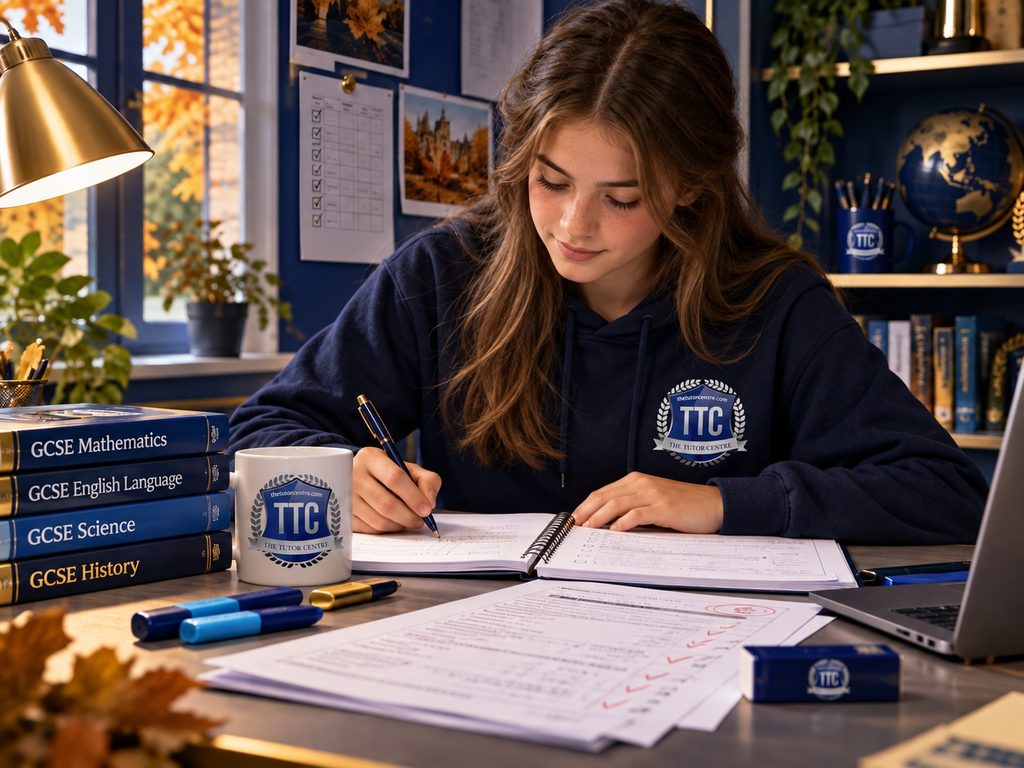
Simply marking an answer wrong and moving on wastes an important opportunity. Strong students investigate their mistakes.
Was the topic misunderstood? Was a formula forgotten? Was the question misread? Was the calculation inaccurate? Was the correct knowledge there, but expressed too vaguely to earn the mark?
Once the reason is identified, the student should correct the answer and then attempt a similar question later. Over time, continually removing these small weaknesses can make a substantial difference to final examination performance.
Exam Technique Has to Be Learnt Too
GCSE examinations test more than subject knowledge. Students must understand how to use that knowledge effectively within the format of an exam.
They need to recognise what a question is asking, understand command words, judge how much detail is required and manage their time appropriately. They also need experience of questions where the correct approach is not immediately obvious.
This becomes particularly important at the higher grades. Grade 7–9 questions often require students to combine several ideas, apply familiar knowledge in an unfamiliar context or work through a problem in several stages.
The more examination questions students encounter, the less unfamiliar these challenges become.
Move From Topic Practice to Mixed Exam Practice
When students first learn a topic, focused practice is useful because they know what method or knowledge they are expected to use. Real examinations are different. The paper does not tell the student which chapter the question came from.
Students must recognise the topic themselves.
That is why preparation should gradually move from individual topic exercises towards mixed questions and full examination papers. This tests whether students can identify what a question requires independently rather than simply repeat a method they have just been shown.
The Highest Grades Require Depth, Not Just Coverage
Completing the GCSE syllabus is essential, but for students aiming at Grades 7, 8 and 9, coverage alone is not enough.
They need depth of understanding. That means being able to explain why something works, connect ideas from different topics and deal confidently with unfamiliar questions.
This is difficult to develop through last-minute revision. It comes from having enough time to learn, practise, revisit, correct mistakes and then be challenged again at a higher level.
Consistency Beats Cramming
Strong GCSE preparation is rarely dramatic. It is usually the result of doing the right things consistently.
Students learn, practise, test themselves, identify weaknesses, correct them and revisit topics later. Repeated over many months, that process can transform performance.
A student entering the examination hall may appear simply to “know everything”. In reality, what we are seeing is the result of hundreds of small improvements made throughout the year.
Helping Students Turn Knowledge Into Marks
At The Tutor Centre in Derby, our GCSE tuition is designed around this progression. Students need secure subject knowledge, but they also need regular practice, feedback and opportunities to apply what they have learnt.
Our small-group approach allows tutors to identify where students are losing marks and target those weaknesses rather than simply moving through content regardless of understanding.
For some students, the priority is rebuilding foundations. For others, it is increasing the level of challenge and developing the skills required to move from an average grade towards Grades 7, 8 and 9.
The goal is not simply for students to say, “I know this.” It is for them to be able to demonstrate it when the examination paper is in front of them.
Start Building These Habits Now
Students do not need to wait until formal revision season to begin preparing like GCSE candidates. The earlier these habits are established, the more effective later revision becomes.
For Year 10 students, there is time to build mastery gradually. For Year 11 students, every week spent identifying and correcting weaknesses now can make later examination preparation considerably more productive.
The strongest GCSE grades are not usually produced by one final burst of revision. They are built through months of understanding, practice, correction and repetition.
If your child is currently in Year 10 or Year 11 and you would like to discuss how we can support their GCSE preparation in Maths, English or Science, contact The Tutor Centre.