
Children develop concentration, patience and independence through everyday practice. The routines parents establish around screens determine how much time remains for reading, conversation, play and sleep. Start these habits early, keep expectations clear and adapt them as children grow. A consistent approach at home supports the behaviours children need for academic progress and adult life.
In Part 1, we explored how screen habits affect children’s opportunities to learn and develop. At The Tutor Centre, we encourage parents to protect those opportunities through practical routines that reinforce confidence, self-control and independent learning.
Offer Reassurance and Useful Alternatives
Before reaching for a phone to settle a child, check whether they need food, rest, reassurance or help with frustration. Name the feeling and offer a manageable next step: “You’re disappointed. Let’s work out what to do next.”
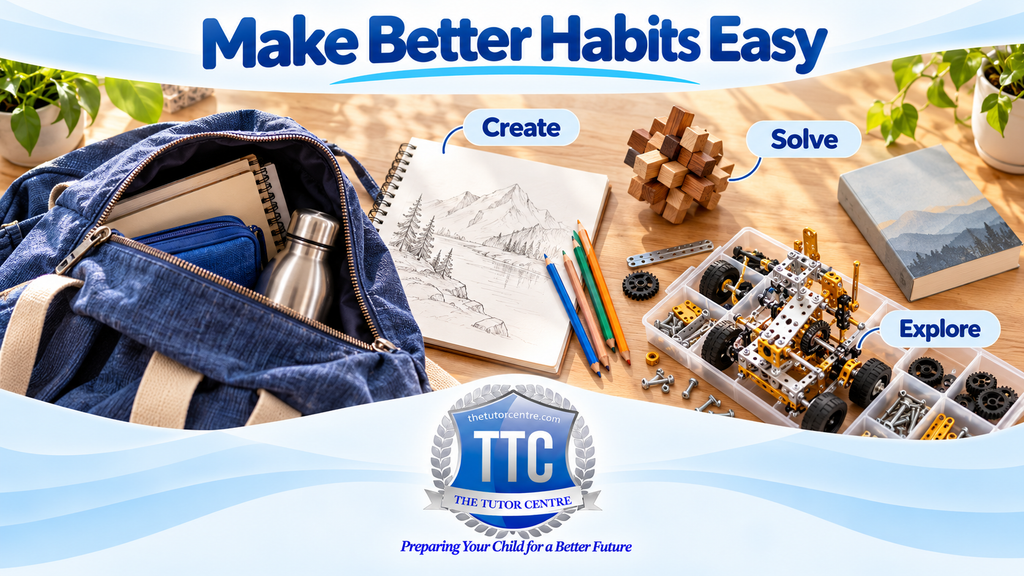
Once your child has settled, offer an activity. Keep alternatives within reach. A book, crayons or construction toy gives a younger child something to explore. Older children need activities that match their interests: a detailed model, drawing challenge, puzzle, board game or outdoor activity.
For adolescents, protect time for sport, creative projects and seeing cousins and friends, without phones preoccupying them. Leave room for enjoyable, self-directed play alongside organised activities.
Prepare a small activity bag for family journeys and while sitting in waiting rooms. Give children regular practice in waiting, making choices and working through difficulties with support.
Make Reading and Conversation Daily Habits
Set aside a regular time for reading. Read aloud to younger children and discuss the pictures and story. As children become independent readers, talk about a character’s decisions, an unfamiliar word or an interesting fact. Follow their interests and keep the discussion relaxed.
Keep mealtimes free from devices and background television. Ask questions that invite an explanation, then listen and follow up. “What made that difficult?” develops a fuller conversation than accepting “fine” or “nothing”.
These exchanges give children practice in listening, organising ideas and explaining their thinking—the same behaviours required in comprehension and reasoning tasks.
Set Clear Boundaries Before Switching On
Agree what your child will watch or play, when it starts and when it finishes. Turn off autoplay and unnecessary notifications. Give a clear reminder before the stopping point and explain what happens next: “After this episode, you’re reading your book, and then we’re tidying your room.”
Choose digital activities with a clear purpose and check the content yourself. Watch or play together regularly so you know what your child is using and how they respond.
Keep Devices Out of Bedrooms
Establish a shared charging place outside bedrooms for phones, tablets and portable gaming devices. Use an ordinary alarm clock instead of keeping a phone beside the bed.
Stop entertainment screen use an hour before bedtime and follow a predictable sequence of getting changed into nightwear, brushing teeth, preparing for tomorrow and quiet reading or conversation. These boundaries protect sleep and family routines.
Keep the routine consistent across school nights and weekends, with bedtime adjusted to your child’s age and commitments.
Teach Children to Stay With a Task
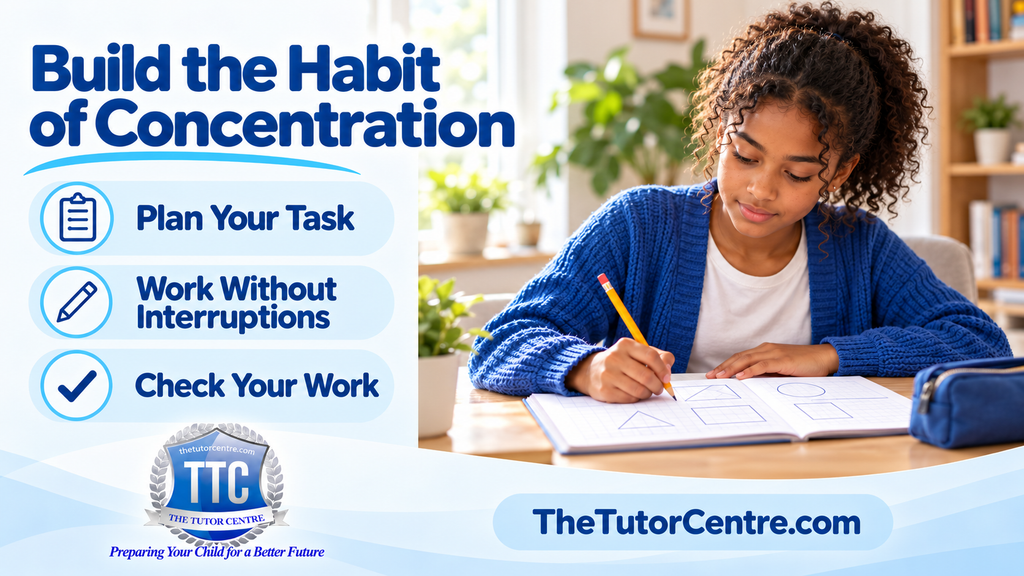
During homework, put entertainment devices away. When schoolwork requires a screen, close unrelated apps and silence notifications.
Set one manageable goal: complete several maths questions, read a passage or plan a paragraph. Follow it with a short movement break. If your child gets stuck, help them identify the first step rather than immediately supplying the answer.
Ask what worked and what needs changing. Encouraging self-regulation supports teaching pupils to plan, monitor and review their learning. Apply these habits to the work in front of them.
Make the Rules a Family Routine
Children notice whether adults follow the same expectations. Put your own phone away during meals and conversations. Explain necessary use briefly, then return your attention to the family.
Involve older children in agreeing boundaries while keeping sleep and schoolwork protected. Avoid and delay introducing social media for as long as possible. Track and protect children from inappropriate content, ensure filters are in place, and engage in regular conversation on harmful content that is harming an entire generation.

Building Habits That Support Academic Progress
Start with two clear changes, such as devices outside bedrooms and uninterrupted homework. Review how consistently the family follows them, and recognise specific effort: starting promptly, stopping at the agreed time or trying again after a mistake.
At The Tutor Centre, our tutoring takes place without screens. We strengthen Maths, English and Science knowledge while encouraging students to concentrate, explain their thinking, ask questions and respond to feedback.
Home routines reinforce these learning behaviours. The child who learns to organise a task, persevere and work independently is practising skills needed from KS2 through GCSEs, sixth form, university and working life.
If you would like to discuss your child’s learning needs and tuition, contact The Tutor Centre.